Skip to content
How to Get Your Child Used to Wearing Glasses
So, you’ve visited your child’s eye doctor and have received the news: it’s time for them to get glasses. The thought of a toddler wearing glasses for the first time or putting prescription glasses on a baby can be downright overwhelming. One of the first things you probably wonder is how you’ll ever get them to keep the glasses on. After all, kids aren’t exactly known for sitting still or leaving accessories alone.
If you’re wondering how to get your child used to wearing glasses, you’re not alone. It’s a challenge that many parents have had to overcome. Read on for some tips that will do the trick.
Signs Your Child Needs Glasses
When a child has vision problems that go undetected, it can affect their performance at school and their behavior at home. If you have observed any of the following symptoms in your child, it’s important to get them scheduled with an optometrist for an eye exam:
-
Squinting
-
Excessive rubbing of the eyes
-
Complaining about headaches or eye pain
-
Covering one eye
-
Tilting the head
-
Sitting too close to the TV, handheld devices or books
-
Having trouble concentrating on schoolwork
Even if your child isn’t experiencing any of the symptoms above, they should have annual eye exams with an optometrist starting around six months of age.
What Does Your Child Need to Know About Eyeglasses?
When your child needs glasses, it’s essential to teach them everything they need to know about why it’s important to wear them, how they can help them, and how to take care of them. However, it’s crucial to present the facts in a positive and encouraging light and not overwhelm them with information.
Focus on the fact that eyeglasses are a fun new accessory or a magical tool that will give them special powers to see better. Consider whether it would be better for you to break the news to them first or if it might be more helpful to have the doctor explain everything. Some glasses offer the option to swap colors too, which may make it fun for them to match their outfits (or mood).
Be careful not to turn the glasses into a battle. Instead of nagging your child to wear them, give them some space and time to get used to them and continue to encourage and praise them as they get used to wearing the glasses.

Eyeglass Safety and Care
It’s important to teach your child how to take care of their new glasses. If they’re old enough, show them how to use a cleaning solution and a microfiber cloth on the lenses. They should also know how to store the glasses in a hard case so that they don’t get scratched or broken.
How to Get Your Child to Keep Their Glasses On
Figuring out how to get your child used to wearing glasses is all about routine and positive reinforcement. It’s essential to keep them involved in the process from the moment you learn they need glasses. Once you teach your child the facts about glasses and how to take care of them, allow them to choose a pair they like, and establish a routine.
The first time your child is ready to put their new glasses on, make sure they’re well-rested and in a good mood. Then, allow them to wear them for short periods until they become part of the daily routine by putting them on in the morning and taking them off before bed.
For babies, look for glasses that offer a head strap or ear adjusters to help keep the glasses on their head or from sliding off. They can also help when growing into a larger size frame, or during active play or sports.
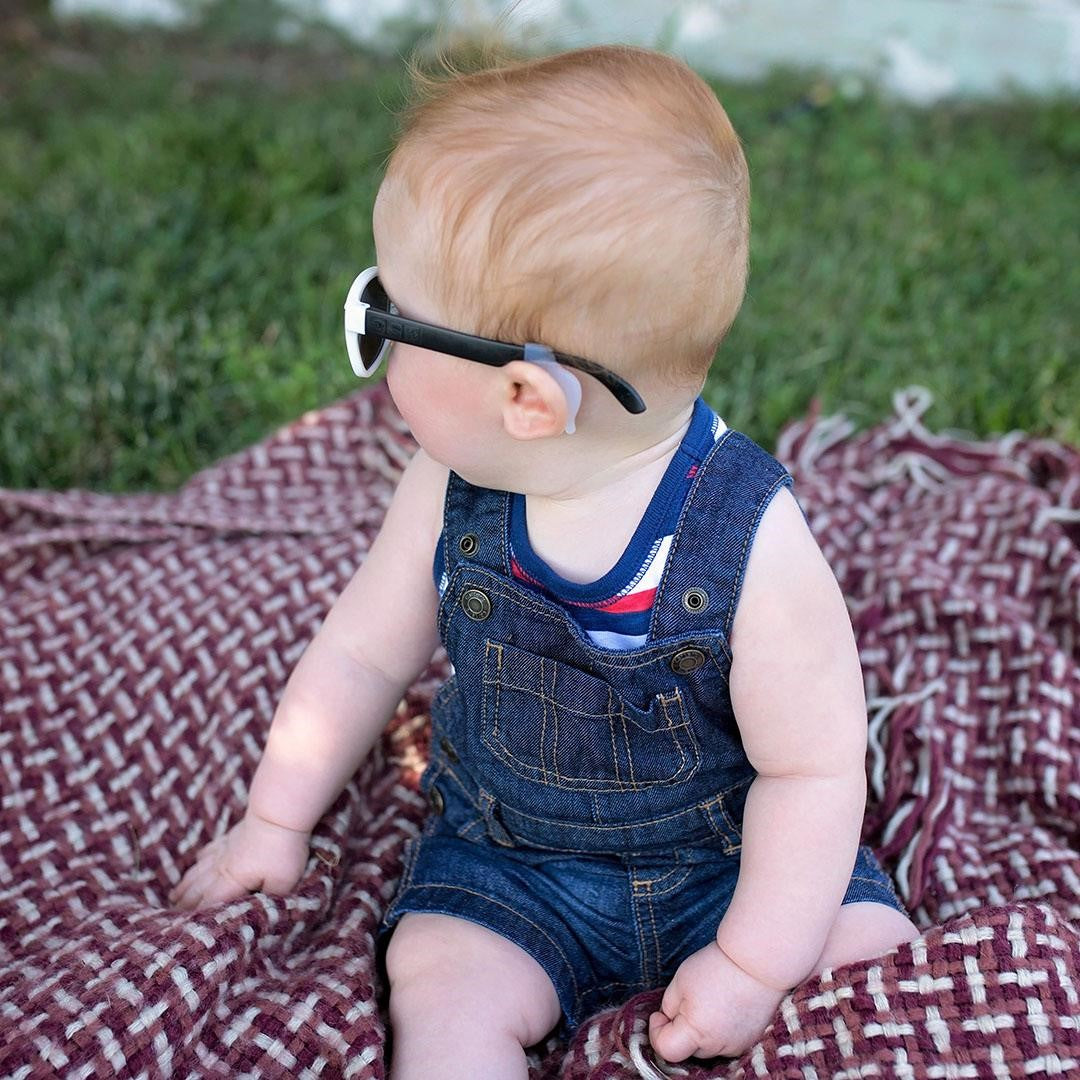
Getting your child’s first pair of glasses can feel overwhelming for both of you, but it doesn’t have to be an unpleasant experience. Follow the tips above, and don’t forget to involve them in the process as much as possible to make choosing their first pair of glasses fun.
Want a little inspiration? Watch this video where a baby tries on his glasses for the first time and can see! Truly heartwarming and makes all the struggles worth it.
Frequently asked questions
What are some signs that indicate my child might need glasses?
Signs that your child may need glasses include squinting, excessive eye rubbing, complaining of headaches or eye pain, covering one eye, tilting their head, sitting too close to screens or books, and trouble concentrating on schoolwork.
How can I help my child get used to wearing glasses?
Introduce glasses as a fun accessory or magical tool that helps them see better. Encourage and praise them for wearing the glasses, and give them time to adjust without making it a battle.
What should I teach my child about taking care of their glasses?
Teach your child how to clean their glasses using a cleaning solution and microfiber cloth, and show them how to store their glasses safely in a hard case.
{"statementLink":"","footerHtml":"","hideMobile":false,"hideTrigger":false,"disableBgProcess":false,"language":"en","position":"left","leadColor":"#146ff8","triggerColor":"#146ff8","triggerRadius":"50%","triggerPositionX":"right","triggerPositionY":"bottom","triggerIcon":"people","triggerSize":"medium","triggerOffsetX":20,"triggerOffsetY":20,"mobile":{"triggerSize":"small","triggerPositionX":"right","triggerPositionY":"bottom","triggerOffsetX":10,"triggerOffsetY":10,"triggerRadius":"50%"}}
false


